
STATE NEWS
Preliminary Report: Statement of the Campaign for Equal Voting Access for Persons with Disabilities (EVAPWD) on the Lagos State Local Government Election 2025

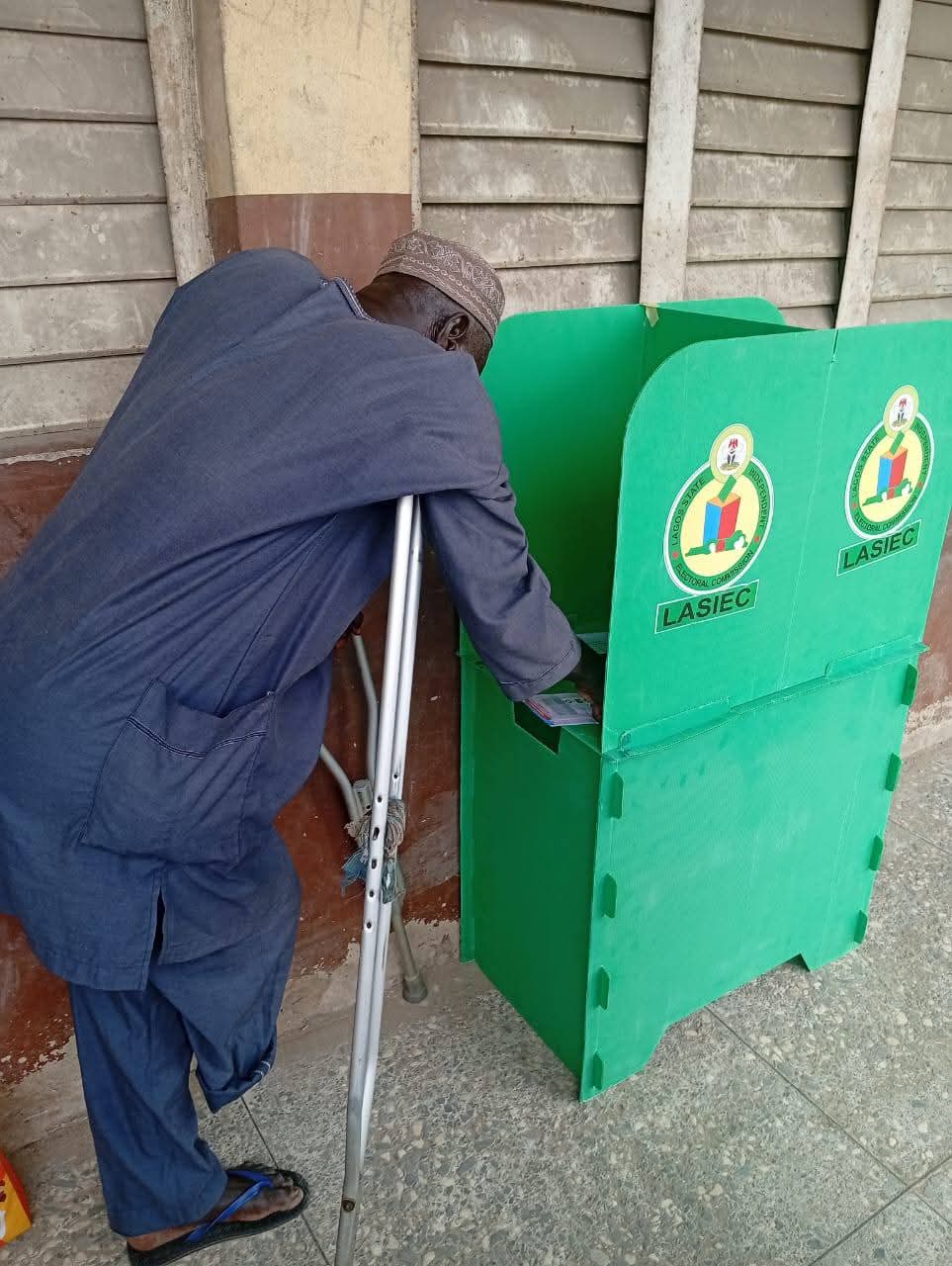
The Campaign for Equal Voting Access for Persons with Disabilities (EVAPWD), an initiative of the Centre for Citizens with Disabilities, has compiled this report, following a comprehensive survey conducted before and after the Local Government Election on July 12, 2025, organised by the Lagos State Independent Electoral Commission (LASIEC). The Centre received and analysed responses from voters with disabilities across all 21 Local Government Areas (LGAs) of Lagos State, focusing on their experiences and the accessibility measures during the election.
The primary aim of this survey was to assess the accommodation provisions made by LASIEC to ensure the participation of persons with disabilities (PWDs) in the 2025 LGA and Council Elections in Lagos State’s electoral process. Additionally, it sought to highlight the importance of equal voting rights and raise public awareness regarding these rights.
The survey’s findings from the survey provided a valuable opportunity to evaluate the compliance of the election management body with the provisions of the Lagos State Special People’s Law, Section 54 of the Electoral Act of 2022, the INEC framework for access and participation of PWDs, as well as the relevant provisions of the Nigerian Constitution of 1999, as amended.
EVAPWD wishes to commend LASIEC for their commitment to upholding democratic principles by conducting the Local Government Election, which allows citizens to hold their elected representatives accountable for the performance of local government projects. This is an essential aspect of a functional democracy.
EVAPWD is pleased to report that many polling units observed provided priority voting procedures for persons with disabilities. Notable polling units where this was effectively implemented include Polling Unit 001 in Ajeromi-Ifelodun Ward 5, Polling Unit 020 in Mushin Ward, Polling Unit 001 in Apapa Ward 3, Polling Unit 007 in Agege Ward D, Polling Unit 31 in Ikorodu Ward G, and Polling Unit 018 in Ojo Ward. We commend the LASIEC officials stationed at these locations for their proactive approach in prioritising PWDs, ensuring they could cast their votes without undue delays.
Our survey has also highlighted that a considerable number of polling units were accessible to persons with physical disabilities. Specific mentions include Polling Unit 053 in Ikeja Ward E, Polling Unit 005 in Amuwo-Odofin Ward 7, and Polling Units 03 and 020 in Apapa and Mushin Wards, respectively. The accessibility of these units can be attributed to thoughtful planning and the strategic locations designated by LASIEC, showcasing a commitment to inclusivity that should be replicated at all polling stations throughout the state.
Nevertheless, EVAPWD has serious concerns regarding the accessibility of numerous polling units for wheelchair users and individuals with other mobility challenges. For instance, Polling Units 021 in Ifako-Ijaye, Unit 041 in Ikorodu Ward E, Unit 005 in Ikorodu Ward B, Unit 017 in Ikeja Ward A, and Unit 001 in Apapa were found to be inaccessible, situated in buildings with stairs and elevated pavements that lacked ramps or pathways for wheelchair access. This exclusion poses a significant barrier and risk, potentially discouraging PWDs from exercising their fundamental voting rights in future elections.
Furthermore, it has been duly noted that essential support tools for PWDs, such as Braille guides, shaded voting booths, magnifying glasses, and sign language interpreters, were largely absent from the polling stations visited by PWDs. The only resources identified were minimal signage, which did not adequately meet the diverse needs of all voters with disabilities. This lack of comprehensive support not only undermines the efforts to ensure equal voting access but also infringes upon the rights of PWDs to fully participate in the democratic process.
In conclusion, while EVAPWD commends LASIEC and other relevant stakeholders for their diligence in conducting the elections as planned and for the notable improvements in priority voting, it is clear that further action is necessary. The significant progress made in terms of accessibility and priority voting for persons with disabilities must serve as a foundation for ongoing improvements.
We strongly urge LASIEC and pertinent authorities involved in the election process in Lagos State and Nigeria to ensure the availability of accessible voting materials and devices in future elections. This commitment will help guarantee that no citizen is left behind when exercising their fundamental democratic rights.